Latest Posts

10 Reasons Why You’re Still Fat After CNY

Don’t you just love the positivity of Chinese New Year, where adults sit in a corner and curse the government with such, vile, passionate anger while children sit in the other corner, smiling, laughing and socialising with their smartphones.

With families indulging in reunion steamboat dinners and jars of pineapple tarts, kueh bangkits, and other new year goodies lying innocuously on tables, it is the time of the year when worries of getting fat ring the loudest. Slimming salons offer themed discounts and enticing promos in a bid to capitalize on low-esteemed Singaporeans, while nutrition companies cash in on the clueless public with their variety of pointless and ineffective slimming products.

It’s probably the most exciting festive season for the majority of Singaporeans, and there’s no reason you should forgo the pleasure of digging into orgasmic snacks due to fears of putting on additional weight. Losing your fat is actually a really straightforward process that is not only fun, but cathartic as well, a process where most of the work is done in the kitchen rather than the gym. I’m not saying that physical exercise isn’t required at all (I’m sorry), but the media and fitness magazines have painted an unnecessarily grim picture on how we should go about our weight goals. Whether you believe what I’m about to say is totally your choice. I am neither going to force you to believe in me, nor sue you should you disagree with me, because firstly, you’re entitled to your wrong opinion, and secondly, my name doesn’t start with Lee and end with Hsien Loong. Read More

Sing50: Spending $348k To Humiliate Local Music

// Photo by Gourmet Adventures (http://gourmetadventures.net/)

Throughout my time dabbling in the media world, I’ve learnt that getting the chance to “work with a famous director” or perform with “established stars at a huge event” is just poppycock for “you’re not going to get paid”. Young and inexperienced, it’s rare to see budding artists forgo such an opportunity that will seemingly kickstart their careers. It’s a double-edged sword practicing your craft in a small, trifling city like Singapore. The music communities are mostly inclusive and welcoming, the close-knit atmosphere a gratifying breeding ground for jam sessions and collaborations, peer reviews and dandy networking. The congenial rivalries propagate a rise in music quality, the friendships a climacteric element for support and encouragement. The tour of an underwhelming paradise stops right there though, as the bleak, cruel, and bleak reality of music in Singapore painfully sinks in.

For a city clearly punching way above her weight, the art scene has generally been disregarded as an, to put it eloquently, awful career path, if there’s even a path in the first place. The government announced a new initiative a few days ago to try and rescue the industry that is in dire conditions. Sing50 is a new fund that was created to “preserve and promote Singapore’s musical heritage”, with an initial purse of $348,000.

The initiative was stemmed from the Sing50 concert that will be held in August to celebrate the nation’s 50th birthday. The two-hour event held at the National Stadium will feature “iconic popular songs, composers, performers and stories that mark the milestones of music in the 50 years since the country gained independence in 1965”.

The project will also develop the nation’s interest and aptitude for music, as Ms. Sim Ann, Minister of State for Education and Communications and Information, said in a speech:

“Music is important to education, and this is why, along with the arts, along with sports and along with PE, the Ministry of Education has been making more and more investments in this area to make sure our students are able to be exposed to as wide a range of the arts as possible.”

On the surface, this whole idea seems pretty noble. There’s money, there’s a platform for people to showcase their skills, and the younger generation is going to get more exposure to local arts and music. The problems have been identified, and solutions are offered. That’s almost certainly a step in the right direction, right?

Let’s just say that even Stevie Wonder would be more successful in a marathon.

I’m not a musician by any means. I play the piano, but that’s pretty much it for me. Upon arriving at the Sing50 website, I checked in at the FAQ section. The questions mainly dealt with the usual enquiries like who’s entitled to apply and the like, but there was one that caught my attention: “Will I receive any allowance or remuneration of any form if my audition is successful?”

The players in the industry are probably already laughing at this point in time.

It’s really hard to take local music seriously when the artists themselves aren’t being respected enough to even get paid for their time and effort. But what can they do about it, besides sucking it up when told that they “are free to go look for another place willing to let them perform”? As much as the quality of local music in a comparative narrative leaves much to be desired, the sheer amount of sacrifices to pursue their dreams, the large sums of money to invest in equipment and the late hours spent falling out with ‘traditional’ parents should at least mean something. The problem exists in almost all parts of the world as promoters often look to take advantage of unsuspecting debutants, but it’s a problem when the government themselves are advocating this questionable practice.

I think it has gotten so bad that it’ll be easier for musicians to just buy stuff from the supermarket and wait for Saturdays and the 9pm show on Channel 8 to come on.

The answer to that question, by the way, brings justice to my introductory paragraph. The auditions are

“an open call for the Singapore community who would like to have a chance to perform in a mega concert at the National Stadium together with professional musicians in celebration of Singapore’s rich musical heritage over the last 50 years. While those selected will not receive allowance or remuneration for their participation in the concert, there will be meals provided if the rehearsal and performance sessions run into lunch and dinner time.

“Mega concert”, “National Stadium” and “professional musicians”, unnecessarily complicated phrases for “you’re not getting paid”.

In all fairness, not offering pay, while eyebrow-raising, is still a pretty understandable decision. But considering the number of rehearsals and the effort it requires to be committed, why aren’t transport costs and small allowances being given? How can you expect great quality and a great spirit if you’re not even treating your independent contractors fairly? And to think that the concert is organised by The Straits Times and The Business Times makes me even more curious as to why no remuneration is provided for a project celebrating how far we progressed from just half a century ago.

Let’s come back to the Sing50 fund for a minute. As reported, the first initiative would be to purchase 50 Steinway-designed Lang Lang pianos, which cost $26,000 each for use at the Sing50 concert on August 7.

To bring the oblivious up to speed, Steinway pianos are probably the best sounding and, unsurprisingly, the most expensive pianos in the world.

They sound so amazing, it makes people feel good without 2 AA batteries.

So, just to clarify, what are a bunch of children who had barely registered two digits in their age column doing with pianos that even a Singaporean MP would struggle to afford with their monthly pay?

These expensive instruments require so, so much in order to really bring the best out of them, and I’m not entirely convinced that schools will spend money maintaining the pianos when it breaks down due to poor handling on the children’s part. The one in my primary school has found home in a corner under terrible lighting, collecting dust during the night, beaten and abused during the day.

You can argue that hey, let only the experienced and well-behaved ones near it, but wouldn’t that nullify the purpose of exposing as many people to music as possible? What good can possibly arise from this arrangement when shouts of elitism has never rang louder? Why are the pianos there in the first place then, some might add, but perhaps, the biggest question posed would be somewhere along the lines of “why aren’t the funds distributed more appropriately”?

For a show to utilize a state-of-the-art facility and instruments loaned from heaven and not pay its artisans, it just blows my mind really. Why not replace the pianos with Hoffman uprights ($8000~), which, based on personal experience, sounds absolutely fantastic and use the remaining cash to promote more gigs, rent or build more venues to provide more platforms for performers to showcase their talents and most importantly, reward people for their hard work and courage to dream?
I believe everyone involved in the project just wants local music to reach, or even surpass the heights it once attained three or four decades ago, but it’s going to fail spectacularly.

The fund, chaired by Mr. Edmund Cheng, is claimed to “introduce the future generations to Singapore music in delightful ways and build up a sense of affinity and community among ourselves as Singaporeans”, but from the way I see it, the only thing that’s Singaporean about this whole project is how the artists are still not being paid. It is regretful, shameful even that we expect the industry to rise without giving due support and respect to everyone who’s trying to make that goal a reality.

Yes, people will get a once-in-a-lifetime opportunity to perform in something so extravagant that I can only imagine how much joy and pride the performers feel on the stage. Yes, our next generation will get to enjoy more ‘mainstream’ attention on music during their curriculum in schools. Yes, the Sing50 fund “gives us the opportunity to continue promoting and preserving Singapore music and the stories behind them”.

But save the exposure crap.

The only thing we can be grateful for is that we didn’t receive the $348,000 in coins.

Follow me on Facebook here and Instagram @wenkai31!


What are your thoughts on this new initiative? Is it genuinely helpful, or is it just another case of showmanship? Let me know in the comments below!

If you enjoyed this post, why not share it with your friends on Facebook or Twitter via the sharing buttons below!


At the end of every month, I’ll be sending out a specially curated email to all my subscribers. Besides containing all of my latest posts and happenings, I’ll also share and feature content from around the web, including humor and jokes, local bands and artists, and personally handpicked articles that discuss a variety of topics among many other things!
It’s free, so let me know your email address below!

← Back

Thank you for your response. ✨

Escape Plan Still

The Great Escape Room Marathon: Xcape, Unravel, Lost.sg, Escape Hunt, Roomraider

I‘ve always wanted to try an escape room. As puzzling as it is for Singaporeans to pay a sizeable chunk of cash to get locked up, there’s no denying the fact that these real-life reality games were ‘trending’ wildly in 2014. Upon catching the movie “Escape Plan”, where Rocky and the Terminator guy attempt to break out of the most secure prison in the world, I decided that now would be the perfect time to embark on an escape room marathon.

For those who might not be aware of what escape rooms are, let me check my calendar real quick. Nope, I wasn’t wrong. It’s really 2015.

Anyway, escape rooms are a type of physical adventure game whereby a group of people are locked in a themed room, usually with a relevant storyline as a pretext for our captivity. They would be required to collaborate with each other and use the elements within the room to solve a series of puzzles, find clues and subsequently find their way out before the time runs out. What started out as a basic solve-and-go game modelled after “escape the room” video games has quickly evolved into one that utilises state-of-the-art technology, with concentration and critical thinking holding more significance than ever before.

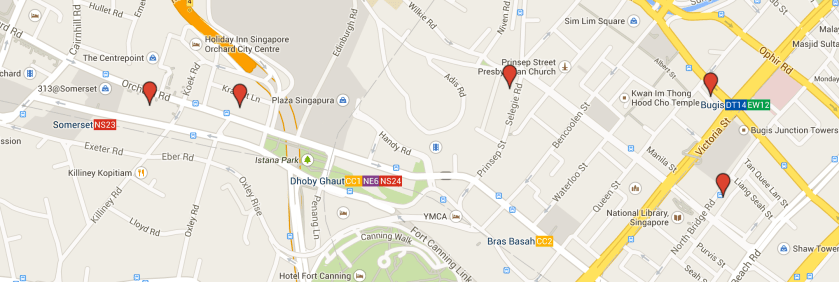
I grabbed five of my friends (Jing Yi, ODS, Khim, Shamemi, Kok Yin), and we commenced our little prison run at about 11 on a bright Saturday morning. The escape rooms we visited were located on a metaphorical straight line as shown on the map below. Starting off from Bugis, we made our way westwards and ended our job at Orchard around 10 hours later. There’ll be a more informative and interactive map at the end of the post if you guys are interested to go on the exact same run during your off day or something.

The Great Escape Google Maps

I was expecting the escape rooms to be vastly similar to each other since they all shockingly revolve around the concept of escaping. I left surprised because it was simply impossible to find clear points for comparison. All the five outlets offered different experiences and proving that one is better than the other would be a rather insurmountable task. Read More

The Great Supermarket Exposé: 16 Ways Supermarkets Are Making Us Spend So Much More

Since everyone in Singapore is doing investigative work, I figured I’ll do a little research on my own, one that would, you know, actually benefit people.

With inflation rising rapidly over the past decade, you might have find yourself spending more and more on groceries. But while a supermarket might seem like a nice, big place to get all your essentials while allowing you a breather from your hectic life, it’s actually waging a psychological war on you every time you step into one, a battle that almost everyone will never triumph.

Over the weekend, I went to three supermarkets, namely Giant Hypermarket (Tampines Retail Park), NTUC Xtra (Ang Mo Kio Hub) and Cold Storage (Causeway Point) to confirm my initial findings. The former two were non-photo establishments, resulting in me getting reprimanded twice at Giant. One of the staff told me it was fine to take photos of the items, but not the price tags, and on hindsight, I realized I shouldn’t have gone it with a DSLR. The photos (taken with my phone) in this post were all from Cold Storage, where I tried to spot a no photography sign for a good five minutes before snapping away.

It has to be noted that none of the following tricks supermarkets use to make you spend more money are unethical. With the advent of the farmer’s market coupled with the rise of provision shops (or mama shops) in recent years, one can hardly blame them for trying to remain dominant in a time where affluence is rife and choices aplenty.

We are not as rational as we like to think we are, and our subconscious affects us more than we think it does. The supermarket is a psychological war zone, a very nasty one in fact, and in the next 20 minutes, I’m going to prove that to you. Read More

Hairway To Heaven: A Visit To TK TrichoKare

Disclaimer: This post is brought to you by TrichoKare and omy.sg. Views, thoughts, and opinions expressed are not influenced in any form of monetary compensation, in-kind products, and/or complimentary services. For more information, please take a look at my Ethics Statement. Pictures are courtesy of omy.sg and TrichoKare.

I have always maintained a high level of curiosity towards hair care centres. Posters and advertisements are plastered everywhere across the island, and with high-profile celebrities jumping on board as their brand ambassadors, they have morphed into a lucrative and ever-growing industry in recent years. What exactly do people do there? Do their treatments really work? Or is it all just a big scam targeted at insecure and gullible folks – like your low-fat, low-calories diet? These are questions I’ve harbored for many years now, so when TrichoKare (TK), a multi-award winning hair care salon, invited me down for an exclusive workshop, I immediately snapped at the opportunity.

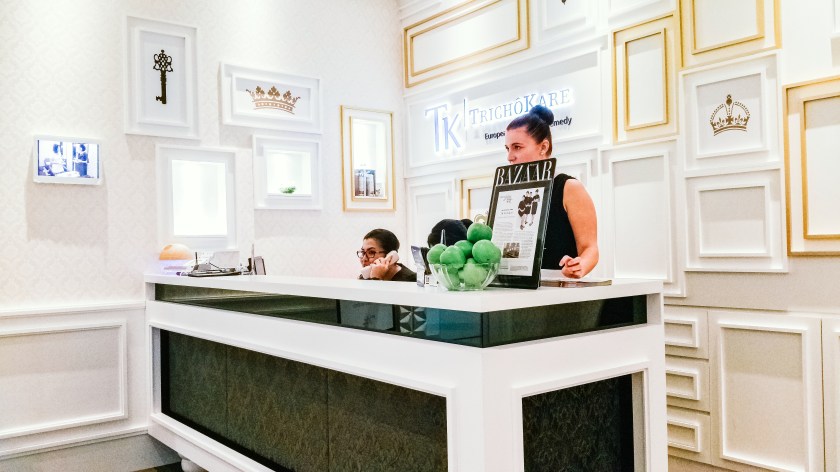
Iarrived at their Orchard Gateway outlet at 1245 and was brought into their VIP room about ten minutes later. The interior design of the entire place was pretty decent. Being a graphic designer myself, I do appreciate a good aesthetic, but I didn’t really read much into it. Empty barrels always make the most noise, and many businesses spent a lot of money sprucing up their place to compensate for their subpar services.

Why herbal?

Alysha, the Senior Hair and Scalp Advisor, opened the workshop with an introduction to herbs after all the participants have arrived.

She talked about the benefits of natural remedies (herbs) and recommended them over synthetic solutions.

Natural Synthetic
Easily expelled and absorbed by the body. Doesn’t get expelled easily.
Various components, work according to body’s
synergy and treats what your body needs.
Only one purpose; targeted treatment.

She also advised against DIY-ing our own herbal treatments as we run the risk of contamination and bacteria transmission without proper supervision. Poor optimisation of the herbs also compromises their nutritional value and subsequent effectiveness.

All about the presentation.

A good hairstyle inspires confidence, showcases one’s personality, and even complement outfits. It’s a subtle, yet striking, part of how we present ourselves to the world. Alex, a Hair and Scalp Advisor, introduced a couple of hairdos Singaporean males swore by back in the days, before helping us find the right styles based on our hair shapes. He also recommends changing one’s hair parting (it’s possible, gasp) to prevent hair loss.

The science of hair growth and hair loss.

Jane Ang, their in-house trichologist, then delivered a lesson on the science behind hair growth and hair loss.

The most common type of hair loss (for males) is Male Pattern Baldness, scientifically known as Androgenetic Alopecia (AGA). It’s pretty scary to think that it could start as early as adolescence and begin as late as our 60s. It also doesn’t discriminate particularly well; people from all races, genders, and walks of life are at risk of AGA.

Jane also talked about how stress, chemical processed hair (rebonding, perming, coloring etc.), overuse of styling products, improper ways of shampooing, and an unhealthy lifestyle (smoking, alcohol, extreme dieting etc.) can all lead to an inadvertent loss of hair. Even using our fingernails to scratch our scalps while showering can result in that too.

I’ve noticed a lot more hair dropping since I decided to grow out my mane, so I raised my concerns asked if she had any hair care tips for me. Jane told me to shampoo my hair and use conditioner daily, and ensure I dry my hair fully before retiring for the night.

We then went for a short break, and they kindly offered us a bento meal for lunch. I felt a little annoyed at myself for spending eight bucks on a plate of pasta earlier – the email stated only “light refreshments will be served” – but it was a (good) sign of things to come.

Applied learning: DIY session.

While waiting for the consultants to get ready, we had a hands-on session to create our own DIY bath bags and natural lifting creams.

Unknown to me before, Alysha explained that bath bags are actually versatile miracle workers. They can be used as a warm or cool compress and applied to your neck, temple or other pulse points. It can also be employed in your laundry, placed in a foot soak, or simply as a loofah. Different herbs also have different properties. A combination of Lavender, Chamomile, and Vebena helps you sleep better, while a mixture of Rosella and Lavender smoothens your skin.

Reality check: scalp analysis.

My friends can attest to how much I care about my hair. To me, it acts as a canvas for experimentation and provides a ‘platform’ to showcase my individualism. I change hairstyles about every two months, and I’ve pretty much experienced all the ‘styles’; from spikes, to fringes, to pompadours, and now, long, tied and buns. I have all sorts of hair products; wax, gels, clay, gum, glue, pomade, water gloss, hair mist, hairspray and volumising powders. I really love styling hair, both mine and others, and I do consider myself having great knowledge on the different products and how to apply them to achieve a certain look. However, I also know for a fact that they are damaging to your scalp if used in excess quantities. Considering I go through a bottle of hairspray in about three weeks and apply a whole chunk of one those aforementioned hair products on a daily basis (before I grew out my hair; now I only rely on a hair tie), I was reasonably petrified of what the scan will reveal.
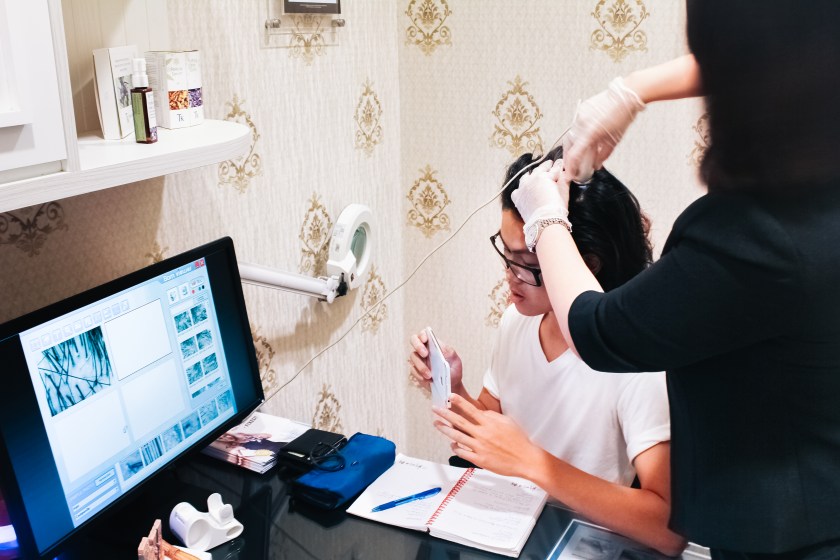
I was brought to the consultation room, where a hair specialist asked me a series of questions to prepare me for my hair scan. After my profile had been established, they proceeded to invade my hair and capture snapshots from three major areas; the frontal area, the top, and the back.

Here are the ‘before’ results:
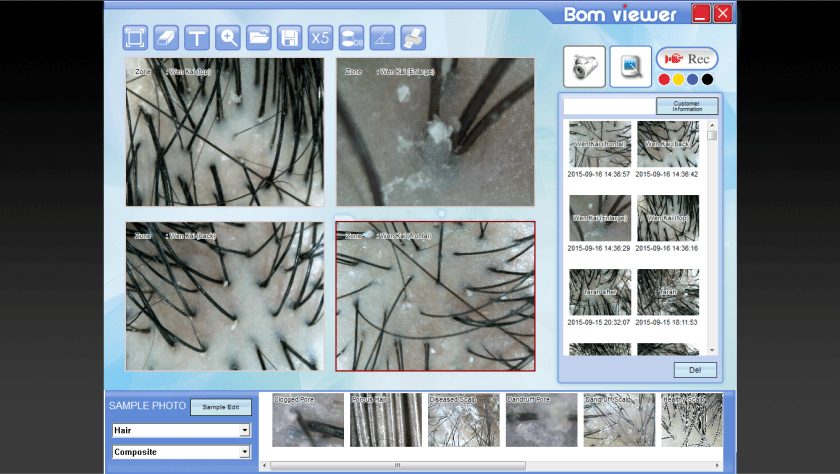
1a - Wen Kai (Before)

It was absolutely crazy to be able to see my hair in such fine detail! (Photo by: TrichoKare)

The most obvious issue to surface was the clogged pores (the white crystals, which are actually hardened oil, you see in the top right image), and adding to that, I was suffering from a little thinning problem at my frontal area (bottom right image). It’s not as dense as my frontal areas, and the strands were visibly thinner than the others. She explained to me that a healthy pore is supposed to hold three to five strands of hair, but it appears that I’m left with one. When that falls out, the follicle closes, and I’ll never have hair coming out from there ever again. Talk about beyond scared straight.

Somewhat comforting was the fact that 90% of the population are suffering from similar issues, so for those who are laughing, the joke’s likely on you pal.

I did recover from the unsettling news, just in time for a customised treatment based on my analysis. I was told TK’s approach to hair loss included the use of herbs, amino acids, and Vitamin B complex.

First, they formulated a scalp mask to treat my clogged pores.

Besides cleansing the scalp, the European herbal hair remedy helps to improve scalp, metabolism and renew scalp cell.

After about half an hour, they washed my hair and massaged my scalp to improve blood circulation. It was relaxing, and I felt compelled to doze off on multiple occasions.

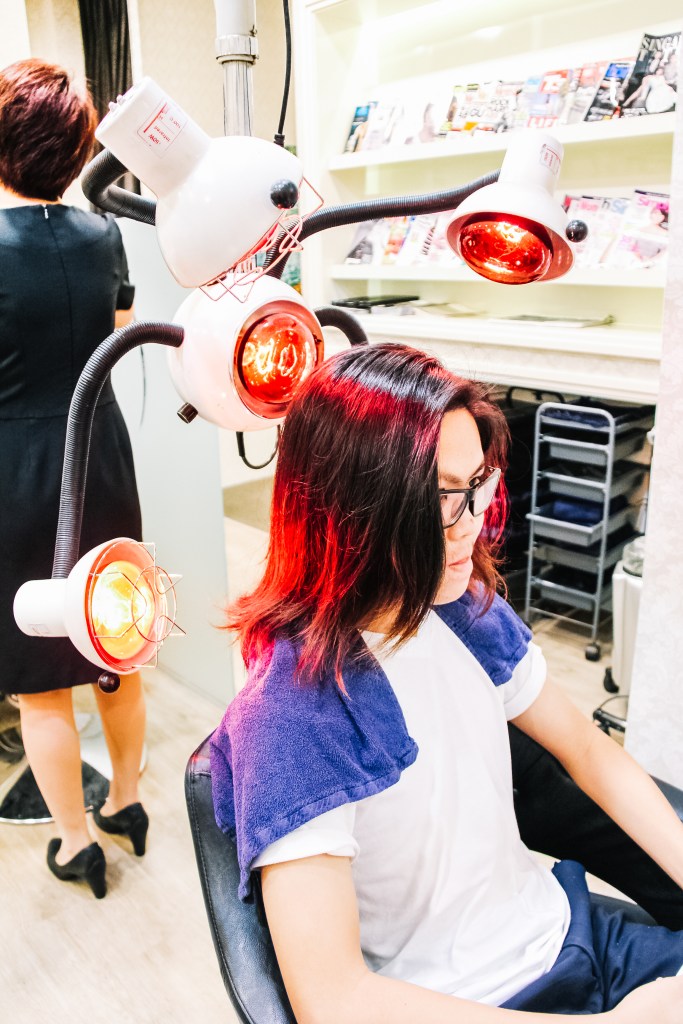
To wrap up the treatment, I was placed in front of a tentacle-sque infrared red light machine to further improve circulation and to ensure the tonics and nutrients are digested fully.
I was whisked back into the consultation room to have my scalp scanned again. It was pretty exciting to find out how much my hair will change and how successful their remedies ultimately were.

Here are the ‘after’ photos:
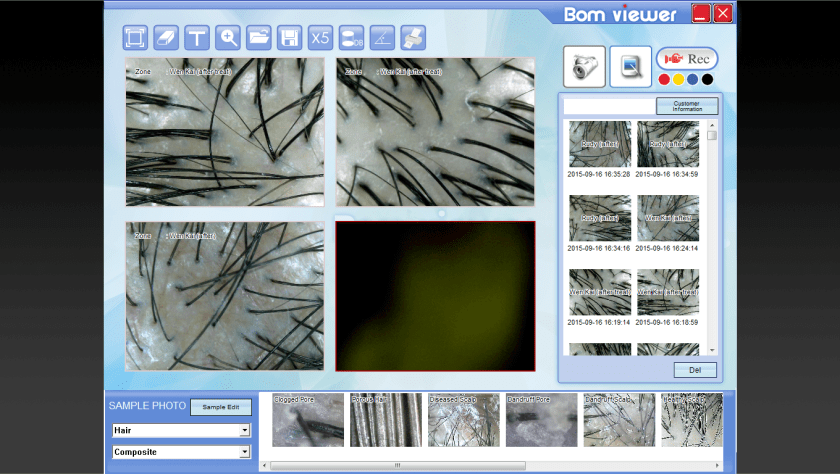
Definitely a substantial improvement. (Photo by: TK TrichoKare)

Definitely a substantial improvement. (Photo by: TK TrichoKare)

As you can see, my pores were no longer clogged. There was definitely a significant difference compared to my initial scan, and that incentivised me enough to take better care of my hair to prevent it from reverting to its original state. Although I am thoroughly satisfied with the staff, the treatment, and the hospitality, I don’t like jumping to conclusions without an injection of objectivity. After all, this is a rehearsed setting and highly controlled environment – besides, they are (kind of) obliged to treat us exceptionally well – but if first impressions mean anything, I would say TK’s certainly worth a shot.

I shall let the results speak for themselves. Here are the ‘before’ and ‘after’ images for comparison:

Hair care is no longer a ‘taboo’ subject that will be met with accusations of vanity and narcissism. It is a legitimate, contemporary issue we should all start paying more attention to, regardless if you’re a male or female. Hair loss is a growing epidemic, and coupled with Singapore’s ridiculous pace of life and sweltering weather, we should all strive to place more emphasis on caring for our hair before unintentional damages become irreversible. There’s nothing to be ashamed or embarrassed about. In our day and age, hair care is an outright necessity.

I appreciate the fact that even after the end of this session, I still had no idea how much the services of TK cost. No one tried to upsell me anything, or ‘gently encourage’ me to sign on for one of their packages. Nothing screams “sleazy” and “unprofessional” more than a business trying way too hard with underhanded sales tactics. I genuinely enjoyed my time there; it felt more like a light-hearted lecture than a serious ‘all-work’ media session. I actually gained a huge chunk of practical knowledge and, without paying a single cent, manage to clarify my doubts with industry professionals. They seem interested in talking about their stories, processes, and philosophies more than anything else really, which is comforting to see. It’s a tiresome chore hearing people going “hey, we’re good, try us!”, and I’m glad TrichoKare managed to walk the talk on this occasion.
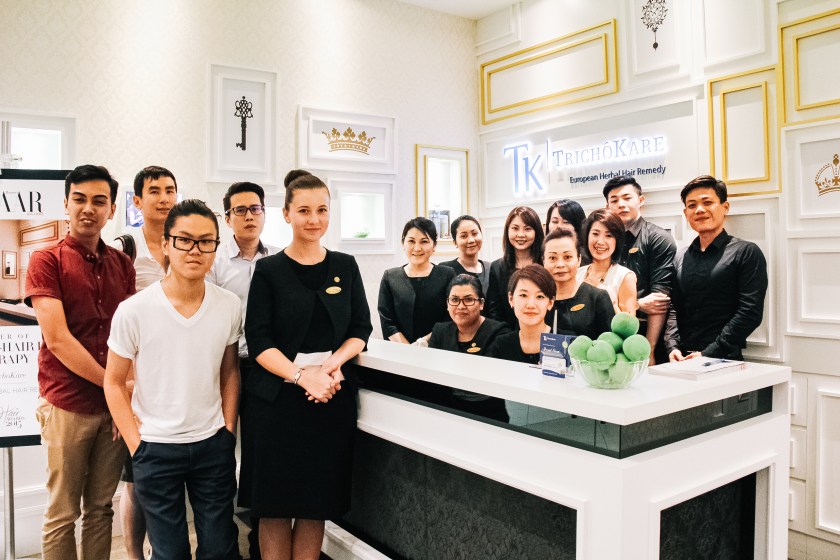
TK TrichoKare is the first ISO 9001 Trichological Centre that provides European herbal hair remedy validated by a certified Trichologists with products formulated by a professional herbalist. They have recently won the Harper’s BAZAAR’s Hair Awards 2015 for Best Anti-Hair Fall Therapy.

For more information about their services, please visit their Facebook page and website at http://tk-hair.com/.


For any advertising, media invites, photography/videography/graphic design assignments, sponsorships, or enquiries, please get in touch with me at collab@lhuwenkai.com

Follow me on Instagram @wenkai31 and Facebook here.


Every once in a while, I’ll be sending out a specially curated email to all my subscribers. Besides containing all of my latest posts and happenings, I’ll also share and feature content from around the web, including humor and jokes, local bands and artists, and personally handpicked articles that discuss a variety of topics among many other things!
It’s free, so let me know your email address below!

← Back

Thank you for your response. ✨

The Great Woodlands Industrial Food Run (Cheapest Sashimi, Cakes, Ice Cream, Poultry & Desserts in Singapore)

As promised, to close off 2014, I’ll be writing a little food guide to help you guys prepare for your New Year countdown party. 

Industrial parks aren’t traditionally known for their food charm. Rustic, probably, but food, not really. However, the reality could not be further from the truth, as industrial parks are probably the best hidden gems of Singapore, with each featuring rows and rows of wholesale food factories that sell their delectable goodies at an absolute bargain.

I live in Woodlands, and for the past two years my dad have been bringing my family on trips to the food haven that’s concealed amongst the dull looking buildings and factories in Woodlands Industrial Park, just a mile away from where I reside. Since the new year is rapidly approaching, I thought it’ll be a great time to let you guys in on some of Singapore’s best kept secrets which will hopefully help ya’ll out during your next party or event.

Read More